AI Agents vs. AI Automation: Differences, Use Cases, and When to Use Each
AI automation follows predefined triggers and steps. An AI agent receives a goal, examines context, chooses tools and next steps, and adapts based on results. Use automation for stable, repetitive, high-volume work. Use an agent for variable, multi-step work that requires interpretation. In production, the strongest design is often hybrid: the agent handles understanding, planning, and exceptions; deterministic systems perform sensitive actions; and people approve high-risk changes.
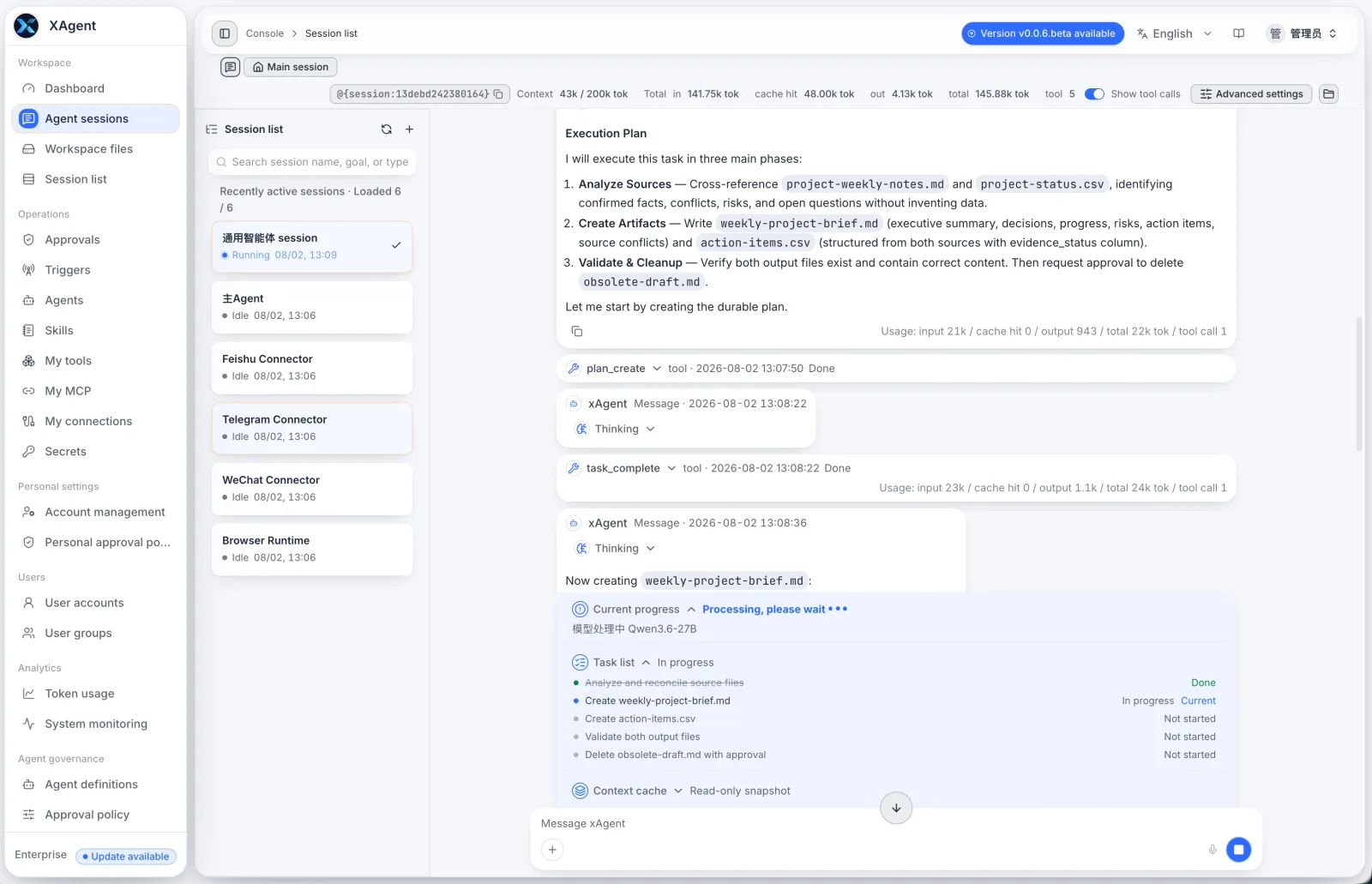
This is not just a product definition. We ran a controlled project-reporting task in xAgent and retained the persistent plan, task progression, deletion approval, generated artifacts, independent inspection, and repair plan. The central finding was simple: an agent can resolve work that is difficult to predefine as a workflow, but “task complete” is not the same as “result verified.”